Lorem ipsum dolor sit amet consectetur adipisicing elit. Optio iste eveniet earum assumenda expedita labore, commodi dicta incidunt, nobis sunt minus officiis! Sequi rem tempora tempore ea corrupti eveniet harum.
Answering Your Search: What an Education Mobile App Development Company Actually Does
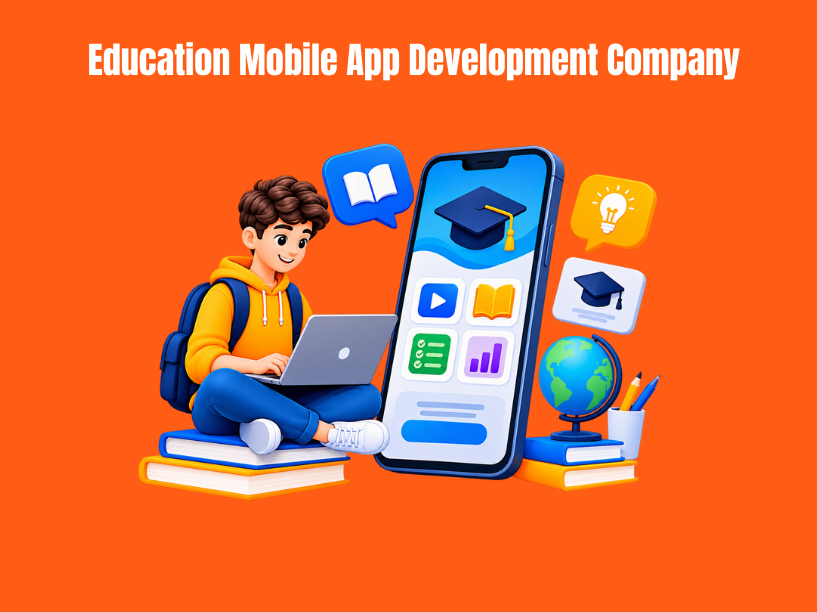
TVL IT Solutions is an education mobile app development company that builds purpose-built learning platforms for schools, universities, EdTech startups, and corporate training teams worldwide. As an education app development company rooted in India, we combine software engineering, UX design, and learning science to deliver applications that go well beyond basic learning apps.
What does an education app development company actually do in 2026? It designs and builds custom learning apps, LMS platforms, virtual classroom platforms, and training apps for Android, iOS, and the web. The scope covers the full lifecycle: from identifying learning objectives and mapping user journeys to launching scalable apps on app stores and providing ongoing support. Education application development today means creating mobile-first ecosystems where learners access content anytime, educators track progress in real time, and administrators reduce manual workload dramatically. The education app market is expected to grow by $46 billion by 2024, and that trajectory continues upward, making this a high-stakes investment for any institution serious about modern education.
The core benefits are tangible: better learner engagement (education apps enhance student engagement by 40%), data-driven progress tracking through analytics dashboards, and always-on access to learning content across devices. Education app developers at TVL IT Solutions work across the education sector to help clients develop apps that meet these outcomes head-on.
Why Educational Institutions and Businesses Need Their Own Learning App
The shift from offline to mobile-first learning accelerated dramatically after 2020. Schools, universities, and enterprises moved to hybrid or fully digital delivery formats within months. Corporate L&D budgets climbed, remote learning became standard, and the expectation for always-available content stuck. By 2024, mobile education apps were no longer supplementary; they were the primary delivery channel for many programs. Education apps allow access to learning resources anytime, anywhere, which is exactly what learners now expect.
For schools and universities, a branded education mobile app delivers differentiation and real-time access to grades, attendance, and course materials. It replaces fragmented communication channels with a single, institution-controlled platform. For training institutes, it means scaling beyond a physical location, managing batches, and delivering course content digitally. For enterprises, a dedicated corporate training app enhances employee learning and development by standardizing onboarding, compliance training, and upskilling across geographies.
Here are the concrete benefits that make this investment strategic:
24/7 content access means learners study at their own pace. On-demand learning apps provide flexible, self-paced learning experiences that fit around work or school schedules.
Remote and hybrid learning extends reach beyond physical classrooms. Virtual classroom apps enable remote education and collaboration without geographic limits.
Personalized learning paths match content to individual learner needs, reducing one-size-fits-all instruction.
Blended models where classroom teaching and app-based practice work together produce richer outcomes and higher completion rates.
Direct communication channels (push notifications, chat, announcements) keep everyone informed without email overload.
Better learner analytics help educators identify who is falling behind and which content needs improvement.
TVL IT Solutions helps clients in India, the Middle East, Europe, and North America modernize learning delivery withcustom software development and mobile app development tailored for education.
Core Use Cases We Build: From K‑12 Apps to Corporate Training Platforms
TVL IT Solutions covers the full spectrum of education app development, from early-stage EdTech startups looking to prove product-market fit, to large universities and enterprises that need scalable, enterprise-grade platforms. Here are the specific app types we develop:
K-12 learning app with homework management: Built for schools, parents, and students. Core functions include assignment posting and submission, teacher feedback, reminders, and grade tracking. Increases student accountability and strengthens parent engagement.
Higher-education student portal app: Designed for universities and colleges. Gives students access to schedules, course content, deadlines, virtual class links, and transcripts. Streamlines faculty operations and supports retention metrics.
Competitive exam prep app (e.g., JEE/NEET, SAT, IELTS): Aimed at coaching centers and individual test-takers. Includes mock tests, timed quizzes, live classes, and performance analytics. Monetizable through subscriptions and positions the brand as a credible prep partner.
Corporate onboarding and compliance training app: For enterprises with distributed workforces. Features mandatory compliance modules, onboarding workflows, quizzes, and certificates. Reduces audit exposure and ensures training consistency across jurisdictions.
Skill-based microlearning app for working professionals: Delivers bite-sized modules (5–10 minutes) with video lectures, quizzes, and reminders. Fits into busy schedules and drives higher completion rates.
Coaching center or tuition institute management app: For private coaching providers managing batches, attendance, fee tracking, schedules, and content delivery. Reduces administrative overhead and helps coaching centers scale beyond a single location.
Language learning mobile app: Features speaking and listening modules, voice recognition, spaced repetition, and gamification. Appeals to a global target audience and drives high engagement and retention.
Test prep and assessment platform with progress tracking: Covers quizzes, diagnostics, adaptive testing, and feedback for both K-12 and corporate use. Captures learning data useful for evaluation and accreditation.
For context, companies like Chop Dawg have delivered over 500 educational apps since 2009, and Designli transformed a surgery podcast into a comprehensive online learning platform, both illustrating the breadth of what education app developers build today. Educational games motivate users to study through play, while E2C apps blend online courses with career readiness modules, showing just how diverse this space has become.
Must‑Have Features in Modern Education Apps
When you develop education apps with a professional app development company, the feature set you choose determines whether learners stick around or drop off. Below are the features that define successful educational apps today, along with why each matters for engagement, learning outcomes, or admin efficiency:
User onboarding and role-based access (students, parents, teachers, admins): Ensures users only see what is relevant to their role, which reduces confusion and secures sensitive data.
Interactive video lessons and downloadable notes: Video content is essential for effective learning in apps. Downloadable notes support offline review and different learning styles. Multimedia integration enhances learning through videos and interactive images.
Live virtual class setup (real-time video, chat, polls): Creates presence and immediacy, replicating in-class dynamics and preventing learner drop-off.
Online tests and quizzes with instant results: Educational apps often include interactive content for engagement. Instant feedback promotes self-evaluation and gives teachers actionable metrics.
Detailed progress tracking and performance dashboards: Education apps should include features for analytics and student progress tracking so educators can intervene early and learners can see their own growth.
Attendance tracking and schedule management: Critical for K-12 and blended settings. Reduces manual tracking and ensures accountability.
Push notifications and in-app alerts: Push notifications keep users informed about new content, deadlines, and announcements. They are essential to avoid drop-off, especially for remote learners.
Discussion forums and 1:1 messaging for doubt resolution: Learners get stuck outside class. Forums enable peer support, and direct messaging with teachers improves clarity.
Gamification (badges, streaks, leaderboards): NMG Technologies increased student participation by 40% through gamified elements. Gamification in education apps increases user participation and engagement across age groups.
Multi-language support and accessibility (WCAG-aligned): Broader reach and legal compliance. Education apps should support screen readers and keyboard navigation for accessibility, ensuring inclusivity.
Secure payments and subscription management: Builds trust when the business model includes paid content or certification fees.
Offline learning mode with automatic sync: Robust offline functionality is essential for learners in remote areas. Astha Technologies, for example, offers custom education apps with offline access and multimedia lessons, demonstrating the value of offline-first design.
User-friendly design enhances engagement in educational apps, and user personalization improves the learning experience for individual users, making both non-negotiable in any modern education app.
Advanced Capabilities: AI, Personalization, and Data‑Driven Learning
In 2026, artificial intelligence and analytics are baseline expectations in high-performing education platforms, not premium add-ons. Adaptive learning, smart recommendations, and automated assessments directly affect completion rates, learning outcomes, and platform stickiness. Research shows that approximately 70% of educators believe AI can enhance personalized learning, and the AI in education market was estimated at USD 5.88 billion in 2024 with projections reaching USD 32.27 billion by 2030.
Here are the advanced capabilities that set competitive education platforms apart:
AI-driven personalized learning paths based on quiz scores and behavior: Adapts content to each learner’s pace and needs, remediating weak areas while avoiding boredom. Personalized learning experiences can reduce dropout rates by 25%.
Recommendation engine suggesting next lessons, practice sets, or courses: Keeps learners moving forward, promotes content discovery, and reduces decision fatigue.
Predictive analytics to flag learners at risk of dropping out or failing: Enables early intervention by instructors, increasing retention and reducing attrition.
NLP-based chatbots for 24/7 doubt resolution and FAQs: Reduces load on teachers, provides instant answers, and keeps learners engaged outside class hours.
Automated grading of objective tests and support for subjective evaluation workflows: Speeds up feedback cycles, frees teacher time, and ensures consistency in assessments.
Integration with existing LMS or SIS and use of standards like SCORM/xAPI: Ensures compatibility with existing infrastructure and enables reuse of learning objects. Learning management systems track educational content and training programs effectively when these standards are followed.
Data visualizations for educators and management to guide interventions: Clear dashboards help non-technical stakeholders see what is working and guide curriculum or resource decisions.
TVL IT Solutions brings deep technical expertise inAI and ML development, including custom ML models and cloud AI services. This capability directly improves learning outcomes and gives clients intelligent tutoring systems that evolve with their learner base.
Key Modules for Different User Roles: Students, Teachers, Parents, and Admins
Effective education application development always differentiates features by user role because each group interacts with the system differently. The UX, the data shown, and the KPIs that matter most vary significantly.
Student module: Includes a course catalog, enrolled courses, progress tracking, assignments, tests, and certificate functionality. UX must be intuitive and mobile-friendly with minimal friction. Key metrics are engagement rate, session duration, course completion, and test scores. Built products include Learning Management System apps and virtual classroom platforms that students access daily.
Teacher module: Provides course creation tools, content upload, live class scheduling, grading, feedback, and student analytics. UX needs to prioritize efficiency and oversight. Metrics that matter include grading turnaround, teacher satisfaction, and content update frequency.
Parent module (for K-12): Offers attendance view, fee receipts, progress reports, communication options with teachers, and announcements. UX must be clean and summary-driven, making it easy to review alerts at a glance. KPIs include parent engagement rate, satisfaction, and timely awareness of student performance.
Admin module: Features a centralized dashboard with role-based user management, course approval workflows, revenue or fee oversight, and content moderation. UX supports oversight, control, and visibility. Key metrics are operational efficiency (hours saved), user maintenance tasks, and content quality control.
TVL IT Solutions’ Education App Development Services
TVL IT Solutions is an India-basedmobile app development company serving global EdTech and education clients. As a development company with experience across K-12, higher education, and corporate training, we provide education app development services designed to deliver measurable results, not generic feature lists.
Here are our specific education-focused development services:
Custom eLearning app development (from concept to launch): Covers ideation, UX/UI, feature set, testing, and launch. Clients typically see higher engagement and faster adoption in learner communities.
Virtual classroom and webinar platform development: Enables live video, interactive sessions, and synchronous engagement. Extends instructor reach across geographies.
Learning Management System (LMS) customization and seamless integration: Whether building a custom LMS or integrating with platforms like Moodle or Canvas. Outcome is standardized reporting and a consistent seamless learning experience.
Mobile learning app development (Android, iOS,cross platform development): Ensures reach across all device types with consistent UX and broader accessibility.
Content authoring tools and admin portals: Tools for creating quizzes, lessons, and managing users. Enables faster content rollout with less reliance on external teams.
Gamified learning app development: Designs engagement loops, rewards, and progression mechanics. Successful educational apps leverage gamification and interactive engagement techniques to keep learners coming back.
Corporate training and onboarding app development: Modules for compliance, internal policies, and skill upskilling. Reduces non-compliance risks and enables measurable productivity improvements.
Legacy education platform modernization and migration to cloud: Updates old LMS or learning platforms to a modern tech stack. Delivers better performance, lower maintenance overhead, and improved scalability.
Appinventiv provides comprehensive support and maintenance for educational apps, highlighting that post launch support is a critical differentiator when choosing an education app development partner. TVL IT Solutions offers the same ongoing support commitment.
Our Education App Development Process
TVL IT Solutions follows an agile, transparent education app development process tailored to each client’s learning objectives, user base, and organizational constraints. The development process includes these main phases:
Discovery and requirements: Stakeholder interviews, defining learning goals, user personas (students, teachers, parents, admins), and success metrics like completion rates and engagement. The education app development process includes app requirements analysis as a critical first step.
Product strategy and roadmap: Deciding between an MVP and a full platform, identifying must-have versus nice-to-have app features, and planning phased releases so early value can be delivered quickly.
UX/UI design: Wireframes, user journeys mapped for each role, and visual design aligned with brand and accessibility standards. UX design focuses on creating intuitive and user-friendly interfaces. Prototyping helps visualize the app’s look and feel before development begins.
Architecture and tech stack selection: Choosing backend, mobile frameworks, cloud infrastructure, and planning integrations with LMS, CRM, or SIS.
Agile development: Iterative sprints, frequent demos with stakeholders, and early releases for feedback. The education app development team works closely with clients through each sprint.
Quality assurance: Functional, performance, usability, and security testing across devices and bandwidth conditions. Quality assurance ensures apps are bug-free before deployment.
Deployment: Publishing to App Store and Google Play, setting up CI/CD pipelines and monitoring. Deployment includes making the app available on app stores with proper monitoring from day one.
Training and documentation: Admin and teacher training sessions, knowledge base creation, and full handover. This step ensures smooth adoption.
Post-launch support and evolution: Analytics-based improvements, new features, and version upgrades. Post-deployment support is crucial for app maintenance and updates over the app’s lifetime.
Tech Stack and Architecture for Scalable Education Apps
Choosing the right tech stack is critical for performance, security, and scalability in education app development. Non-technical decision-makers should understand why each layer matters, even if they never touch the code.
Frontend and mobile:React Native or Flutter for cross platform development efficiency. Native Android (Kotlin) and iOS (Swift) when high performance or OS-specific features are needed. Responsive web frontends in React or Angular for browser-based learners and admins. For a detailed comparison of frameworks, see our guide onFlutter vs React Native.
Backend and APIs: Node.js, .NET, Java, or PHP (Laravel) depending on team expertise and performance requirements. REST or GraphQL APIs for clean data exchange. Microservices architecture where scale demands it. TVL IT Solutions’enterprise backend development capabilities support this layer.
Databases: PostgreSQL, MySQL, or MongoDB for structured and unstructured data. Cloud-managed databases for reliability, high availability, and automatic scaling.
Real-time and communication: WebSockets or WebRTC for low-latency virtual classrooms and live chat. Third-party video APIs (Jitsi, Zoom SDKs) or custom video stacks as needed.
Cloud and DevOps: AWS, Azure, or Google Cloud for hosting. CI/CD pipelines, automated monitoring, logging, auto-scaling, and containerization (Docker, Kubernetes) for microservices.
Analytics and BI: Integrated dashboards or tools like Power BI and Tableau. In-app analytics SDKs (Mixpanel, Amplitude) to track user behavior, retention, and performance tracking metrics.
Security by design: End-to-end encryption, secure authentication (token-based, multi-factor), and role-based access control baked into the architecture from day one. OWASP compliance and regular penetration testing.
Security, Compliance, and Data Privacy in Education Apps
Student and employee data is among the most sensitive information any application handles. For any top app development company building education platforms, robust security is non-negotiable. Educational apps must comply with legal regulations like COPPA and FERPA, and education apps must have a clear approach to student data privacy and security.
TVL IT Solutions follows these practices:
End-to-end encryption for data in transit and at rest, covering SSL/TLS, encrypted databases, and storage.
Strong authentication and authorization, including role-based permissions that restrict access based on user type.
Regular security audits, vulnerability scanning, and code review practices, including third-party audits where appropriate.
Compliance awareness for FERPA, COPPA, GDPR, and regional data protection laws depending on client geography (India’s DPDP Bill, Middle East regulations).
Data minimization, retention policies, and support for user data deletion requests to satisfy privacy rights.
Secure backup, disaster recovery plans, and documented incident response processes.
Access control and environment hardening for offshore development teams, with clear separation of production and development environments.
We avoid exaggerated security claims and focus on industry-standard, transparent practices that stand up to audit scrutiny.
Engagement Models for Education App Development with TVL IT Solutions
Different organizations prefer different collaboration structures depending on their stage, internal resources, and project complexity. TVL IT Solutions supports multiple engagement models:
Dedicated team model: A long-term extension of the client’s product team for continuous platform evolution. Typically chosen by enterprises and institutions running ongoing education platforms that need regular feature additions and optimization.
Fixed-scope project model: Clearly defined scope and deliverables for a specific app or module. Best suited for organizations building an MVP or launching a well-defined education mobile app with a known feature set.
Time and material model: Flexible scope where requirements may evolve, suited to innovation labs, R&D projects, and startups exploring new app development solutions.
Hybrid model: Combines fixed scope for core features with ongoing dedicated capacity for enhancements. Works well for education business clients who want to launch quickly and iterate based on learner feedback.
Case Studies: Real‑World Education Apps Built by TVL IT Solutions
The following are illustrative examples from TVL IT Solutions’ experience, focusing on challenges, solutions, and outcomes rather than marketing claims. Engagement mechanics are crucial for the retention of education apps, and each case below demonstrates this principle in action.
Regional coaching institute app (India, 2023): A mobile learning app with live classes, recorded video lectures, and progress tracking for exam prep students. The app replaced manual attendance and scheduling, reducing administrative tasks significantly and driving an increase in daily active users through active participation features and gamified assessments.
Corporate compliance training platform (Europe, 2022): A mobile-first microlearning app with quizzes, reminders, and analytics for a distributed workforce. The platform improved completion rates and simplified compliance reporting for management. This aligns with broader industry findings: one case study showed completion rates jumping from approximately 34% to 71% with a well-designed mobile training app.
University student portal and LMS companion app (Middle East, 2024): Integrated timetable, push notifications, grade tracking, and virtual classes. The app smoothed communication between students and faculty and improved on-time assignment submissions measurably.
B2C language learning app for a startup (global audience, 2021–2022): Gamified lessons, streaks, and social challenges designed to build daily habits. User engagement metrics including session length and 30-day retention exceeded initial targets, confirming the interactive learning approach. Another industry example (Flutter, Node.js, AWS stack) saw approximately 40% increase in student engagement and approximately 60% reduction in admin work within six months.
Best Practices When You Plan to Develop Education Apps
Before you contact an app development company, invest time in planning. Educational apps involve complex user dynamics and pedagogy, and getting the foundations right saves significant rework later.
Define clear learning objectives and success metrics before detailing features. What does success look like: completion rates, test scores, satisfaction, active participation?
Identify primary user segments (age group, region, device access, teaching methods they are used to) and design accordingly for your target audience.
Prioritize an MVP feature set instead of trying to launch everything at once. Create apps that solve the most urgent problem first.
Involve educators and learners early in UX design and usability testing. Student-driven design improves adoption and ensures the app fits real workflows.
Plan content strategy (video lectures, quizzes, PDFs, course content formats) alongside technology decisions. The two are inseparable.
Consider accessibility and multi-language support from day one. Retrofitting is expensive and disruptive.
Align your app roadmap with academic calendars or corporate training cycles so launches coincide with peak adoption windows.
Decide early how you will measure performance tracking and learning outcomes. Bake analytics into the architecture, not as an afterthought.
Plan for ongoing content updates and feature evolution. An education app is a living product, not a one-time launch.
Explore howAR/VR development can enhance experiential learning for STEM, medical, or hands-on training content.
How to Choose the Right Education App Development Company
Specialized educational app developers bring both technical expertise and an understanding of learning science. Choosing a generic mobile app development company without education domain experience often leads to apps that look polished but fail pedagogically. The best education app developers understand curriculum alignment, learner psychology, and compliance requirements.
Use these criteria when evaluating app development companies:
Check for a proven portfolio in educational apps, LMS, or training platforms, not just generic mobile apps. Look for depth across K-12, higher ed, or corporate training.
Ask how they handle progress tracking, analytics, and reporting for learners and managers. Surface-level dashboards are not enough; you need actionable data.
Verify their approach to security, privacy, and regulatory compliance (GDPR, COPPA, FERPA where applicable).
Discuss their UX process and how they incorporate feedback from teachers and learners during the development process.
Understand their preferred tech stack and how it fits your IT ecosystem. Ask about latest technologies and their approach to scalable apps.
Evaluate communication style, transparency, and project management practices. Regular demos, documentation, and clear app development process milestones matter.
Request references or case studies from similar projects or regions. Real evidence beats sales decks.
Clarify maintenance, ongoing support, and long-term partnership expectations. Post launch support separates serious partners from vendors who disappear after launch.
TVL IT Solutions fits these criteria with global delivery across India, the Middle East, Europe, and North America; offshore software expertise; scalable architecture; and a security-first development approach built into every engagement.
Get Started with TVL IT Solutions as Your Education Mobile App Development Partner
TVL IT Solutions combines custom software development expertise, offshore development capabilities, and a security-first approach to deliver education platforms that work in the real world. As the best education app developers for clients who value transparency, domain expertise, and long-term partnership, we have built elearning apps across K-12, higher education, and corporate training for clients in multiple regions.
Whether you need to create apps for a coaching institute, build a virtual classroom platform for a university, or modernize an enterprise compliance training system, here is what getting started looks like:
Initial consultation to understand your learning goals, target users, and current infrastructure.
High-level solution outline and recommended engagement model based on your scope and timeline.
Optional discovery workshop to refine requirements, user journeys, and a phased roadmap.
Clear next steps for design, development, and launch with defined milestones.
If you have an education app idea or a legacy learning platform that needs modernization, reach out to TVL IT Solutions. We are ready to help you build education platforms that deliver a personalized learning experience, drive active participation, and stand up to the demands of modern education. Contact our education app development team to start the conversation.
Frequently Asked Question
What does an education mobile app development company do?
An education mobile app development company designs and builds learning applications for schools, universities, EdTech startups, and corporate training teams. Services can include custom eLearning apps, LMS platforms, virtual classrooms, testing systems, and ongoing maintenance.
What features should an education mobile app include?
Essential features include student and teacher accounts, interactive video lessons, online quizzes, progress tracking, attendance management, push notifications, discussion forums, gamification, accessibility, and offline learning.
Can education mobile apps integrate with existing LMS platforms?
Yes. Education apps can integrate with existing learning management systems, student information systems, CRM platforms, and HR systems using APIs and standards such as SCORM and xAPI.
How long does it take to develop an education mobile app?
The timeline depends on the app’s features, integrations, and content readiness. A focused minimum viable product (MVP) can move from discovery to launch in a matter of months, with additional features introduced through phased releases.
How do education mobile apps protect student data?
Education apps can protect student data through encryption, secure authentication, role-based access controls, regular security audits, data minimization, and secure backups. Development should also account for applicable privacy regulations, including FERPA, COPPA, GDPR, and regional data protection laws.
Transform Your Ideas Into Powerful Software Solutions
At TVL IT Solutions, we specialize in delivering scalable, secure, and custom software development services tailored to your unique business needs. Whether you’re a startup or an enterprise, our team is ready to turn your vision into reality.