
Mobile app development for startups in 2026 looks nothing like it did even two years ago. Users now expect AI-native features, personalized experiences, and ironclad privacy. Regulations like GDPR, CCPA, and emerging state-level laws have raised the compliance bar. And with Apple processing nearly 8 million app submissions in 2024 alone, the app stores are more crowded and selective than ever.
This guide is for non-technical founders, product leads, and startup teams planning to build their own app. Whether you are validating an idea, choosing a technology stack, or preparing to launch on the Google Play Store or Apple App Store, the entire process is covered here with concrete examples, data, and pitfalls to avoid.
TVL IT Solutions is a custom mobile app development company based in India, helping global startups move from idea to launch and beyond. Throughout this playbook, you will see how working with the right development partner shapes better outcomes at every stage. Let’s get into it.
Before writing a single line of code, founders need to understand the landscape they are entering. Over 90% of smartphone usage is spent on apps, and over 90% of smartphone users prefer apps over websites. That sounds like a massive opportunity, and it is, but the flip side is brutal. In 2024, 46.1% of Android apps installed were uninstalled within 30 days. Health-related apps fare even worse, with a median 70% of users discontinuing within the first 100 days.
Here are a few more numbers that should shape your thinking:
Simply “having a mobile app” is not enough. What separates a successful mobile app from the graveyard is user engagement, retention, and solving a problem people genuinely care about. These numbers should guide your startup’s scope, budget discipline, and approach to market research from the very first conversation.
Given the reality check above, chasing trends and loading up on advanced features will not save you. Startups aiming for traction need to focus on five fundamentals.
First, problem–solution fit. Before any development begins, confirm that real users care deeply about the problem you are solving. Poor product market fit remains one of the top reasons startup apps fail. Second, a lean minimum viable product. An MVP is the simplest version of a product that lets you test your core hypothesis without burning months and resources. Third, exceptional UI/UX. User experience design is crucial for app adoption and success, directly driving activation, retention, and app store reviews. Fourth, a scalable and secure tech stack. Modular architecture, cloud-native infrastructure, and built-in compliance (GDPR, CCPA) protect you as you grow. Fifth, a strong product-engineering team. This means close collaboration among founders, designers, and app developers, with clear decision-making, frequent release cycles, and a shared sense of ownership.
Each of these ingredients influences early traction, investor confidence, and long-term maintainability. The sections below go deeper into MVP planning, tech stack choices, and user engagement tactics.
The startup app development process follows a clear path: discovery, validation, UX/UI design, development, QA, launch, and evolution. The app development process includes defining strategy and planning before any design or code work begins. Startups should prioritize speed and value in mobile app development, keeping every phase lean and focused.
Step 1: Discovery. Clarify the problem, define your target audience, and map constraints. Choose your platform, compliance requirements, and preliminary tech stack here.
Step 2: Validation. Research competitors, run experiments, and decide on your business model and monetization approach. More on this in the next section.
Step 3: UX/UI Design. Sketch user flows, build wireframes, and prototype. Plan your onboarding sequence and first app store screenshots.
Step 4: MVP Development. Build core features, set up your backend and APIs, and integrate essentials like authentication and payments. MVPs should focus on core features to minimize development costs.
Step 5: Quality Assurance. Test functionality, usability, performance, device compatibility, and security. Testing and quality assurance are crucial before app launch.
Step 6: Launch. Prepare metadata, privacy policies, and app store listings. Deployment requires submitting the app to app stores and meeting review requirements.
Step 7: Iterate. Monitor analytics, collect feedback, and improve. Launch is the starting point, not the finish line.
Decisions about monetization, analytics setup, and go-to-market strategy should be woven into the timeline during or even before MVP development. Working with an experienced app development company like TVL IT Solutions reduces risk by catching scope creep early, anticipating scaling needs, and navigating app store review processes.
Skipping idea validation is one of the most expensive mistakes for many startups. A staggering 70% of apps fail due to lack of market testing, and ignoring user validation leads to building unwanted features that nobody asked for.
In 2026, market research starts with mining app store competitor reviews, monitoring social media communities on Reddit, Discord, and Slack, and using tools like SimilarWeb or public product launch platforms like Product Hunt. Pay attention to what users complain about in competitor apps; that is where your opportunity lives.
Define your target audience by building two or three concrete user personas. For example:
Before committing to full mobile app development, run simple validation experiments. Set up a landing page to capture signups. Build a no-code prototype to test key flows. Conduct five to ten user interviews with clickable prototypes. Run smoke ads to measure interest before the app even exists. These experiments cost a fraction of development and can save you from building something nobody wants.
There is a critical difference between your long-term product vision and what your first release should include. A Minimum Viable Product (MVP) should be prioritized for initial launch. MVPs help startups validate their ideas with real users before investing in advanced features.
Start by listing every feature you can imagine, then ruthlessly prioritize using a framework like MoSCoW (Must, Should, Could, Won’t) or RICE (Reach, Impact, Confidence, Effort). Only the “Must” features survive into V1.
Here are example MVP feature sets for three startup types:
Launching an MVP allows for quick user feedback and iteration. Building an MVP allows for rapid iteration based on feedback. Startups can launch an MVP within 60 days with disciplined scope. Overcomplicating features can overwhelm users and delay growth, so launch with a narrow problem solved end-to-end rather than many half-baked features. Industry benchmarks suggest MVP development costs can be as low as $10,000 for simple apps, while complex apps can cost upwards of $100,000 to develop.
Your tech stack is the combination of frontend frameworks, backend services, databases, cloud infrastructure, and integrations that power your mobile application. Choosing the right mobile app stack early has ripple effects on performance and user experience, scalability, and long-term maintenance.
Android holds approximately 72 to 76% of the global mobile OS market, while iOS sits at 18 to 28% depending on region. If your target audience is in India, Southeast Asia, or Africa, android app development is likely your priority. For North America or Western Europe, or if your monetization relies on higher per-user spend, ios apps may come first.
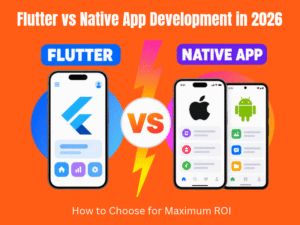
Native development (Swift/Kotlin) delivers the best raw performance and access to device-specific features. Cross platform development using frameworks like Flutter orReact Native allows you to share code across both operating systems. Cross-platform frameworks can reduce mobile app development time and costs, and using cross-platform frameworks can reduce development costs by 40%. Cross platform apps are a strong choice for startups that need to reach both Android and iOS app users quickly.
TVL IT Solutions helps startups evaluate these trade-offs, weighing performance, scalability, and maintainability rather than just initial build speed. The right choice depends on your geography, user behavior, and business model.
Design directly affects activation, retention, and app store reviews. Exceptional UI/UX design boosts user engagement and retention, while good UI/UX design can lead to higher app ratings and reviews. A well-designed app can improve brand visibility significantly and increase brand credibility significantly. Design sophistication significantly impacts app development costs, but cutting corners here is a false economy.
What does exceptional UI/UX look like in practice? Fast onboarding with minimal steps. Intuitive navigation enhances user experience and satisfaction. Essential app features include a simple menu structure and fast-loading content. Clear calls to action on every screen. Location-based services are crucial for enhancing user experience in many app categories.
Successful design patterns worth studying include one-tap signup via Google, Apple, or SMS, bottom navigation bars for easy thumb reach, and contextual push notifications. Apps can increase user engagement by up to 40% with push notifications, and push notifications can improve user engagement by up to 40%, making them one of the most effective tools for keeping users engaged. The “Duolingo for X” trend in 2026, where niche apps use daily habit loops, streaks, and micro-learning mechanics, shows how design patterns drive better user engagement across categories like fitness, education, and wellness.
Before committing to full development, test your designs affordably. Remote testing tools like Maze or Lookback, five-user usability tests, and clickable Figma prototypes reveal major usability issues early. Mobile apps enhance brand visibility by being on users’ home screens, so every screen matters.
Even early-stage startup apps must think about scaling and security from day one. Security measures should be incorporated into the app from the start, not patched on later. Mobility solutions should plan for variable network conditions to ensure usability across diverse markets and connection speeds.
Scalable architecture for startups means modular code with separated UI, business logic, and data layers. Clean API boundaries allow features to be replaced or extended without rebuilding core systems. Cloud-native infrastructure with auto-scaling, managed databases, and monitoring tools means you are ready for traffic spikes without over-provisioning.
Core security practices include secure authentication (OAuth, two-factor), encrypted storage at rest and in transit, safe API communication via HTTPS with certificate pinning, and regular security audits. Compliance awareness is non-negotiable: GDPR for EU users, CCPA for California, and emerging state-level privacy laws are actively enforced.
TVL IT Solutions follows a “security-first” and “scalable-by-design” approach for startup app development services, setting up secure authentication, data encryption, and privacy policy readiness from the first sprint. This is not just a technical checkbox; it directly protects your user base and your reputation.
Agile development suits startup uncertainty. Short sprints of one or two weeks, frequent releases, and constant learning let you adapt as you discover what app users actually need. Short release cycles enable startups to respond to feedback and changing priorities effectively.
Here is what founders should expect week-to-week from a development partner: sprint planning sessions to set priorities, daily standups for quick status checks, sprint demos where working software is shown, and backlog grooming to refine upcoming work.
Automated testing and CI/CD pipelines enhance development efficiency and product quality. Continuous integration and delivery mean every code change is automatically tested and deployable, reducing regression bugs and speeding up releases. These practices are standard for the best app developers and should be non-negotiable in any engagement.
TVL IT Solutions typically collaborates with startups through a dedicated team model, where the team embeds with the startup for ongoing development. A product owner role, usually the founder or product lead, stays involved daily. Progress tracking is transparent, with shared kanban boards, demo sessions, and roadmaps visible to all stakeholders. This model works especially well for startups that need rapid iteration and ongoing support.
Early negative reviews from crashes or bug fixes left unresolved are extremely hard to recover from on the Google Play Store and Apple App Store. User ratings help build credibility and trust for your app, so protecting your first impression matters enormously. Testing and maintenance can account for 15 to 25% of annual development costs, which underscores why it should be planned, not treated as an afterthought.
Key types of testing for startups include functional testing (does the app work as intended?), usability testing (are flows clear?), performance testing (speed, memory, responsiveness), security testing (penetration tests, permission misuse), and device/OS compatibility testing (different screen sizes, low-end devices, various OS versions).
For an MVP, build a pragmatic test strategy focused on critical paths first: signup, login, payments, and core workflows. Use beta testing channels like TestFlight and Google Play beta, crash reporting tools like Sentry or Crashlytics, and automated test suites to catch regressions.
TVL IT Solutions integrates quality assurance from the start of the startup app development process, not just before launch. This early QA approach catches issues when they are cheapest to fix and makes releases smoother.
Publishing on the Google Play Store and Apple App Store requires developer accounts, compliance with platform guidelines, and passing the review process. Apple reviews typically take one to three days; Google Play takes two to seven. Brand-new developer accounts often face additional scrutiny.
App store optimization is foundational. Choose a keyword-rich title and subtitle, write a description optimized for both search and human readers, and include impactful screenshots and videos showcasing core features. A strong icon, localized metadata, and preview videos where allowed all improve conversion rates.
For a lean go-to-market strategy, consider a soft-launch or beta in a smaller market first. Seed an early community through social channels, influencer outreach, or content marketing. Coordinate your press kit, social assets, email campaigns, and landing page with your app build so nothing delays launch week.
Integrating analytics from the start helps track user behavior and performance metrics. Set up attribution tools at launch to measure installs by source, retention by day, and funnel drop-offs from the very first user.
Launch is just the beginning of the real learning cycle. User feedback is crucial for app improvement and retention, and user feedback is essential for ongoing app improvements. Without structured feedback loops, you are flying blind.
Key metrics every startup should monitor include DAU/MAU (daily and monthly active users), activation rate (percentage completing a first core action after signup), retention cohorts (who is still active after 1, 7, and 30 days?), churn reasons, and funnel drop-offs. User engagement metrics such as retention and conversion rates are essential for product success. Mobile apps can improve user retention by up to 40% when feedback-driven improvements are applied consistently.
Collect structured real user feedback through in-app surveys, NPS prompts, support tickets, and user interviews. Prioritize by frequency and impact, then feed insights into a roadmap. Early feedback from your first cohort is the most valuable data you will ever collect.
TVL IT Solutions supports ongoing evolution through adding new features, refactoring technical debt, performance tuning, and preparing for new OS versions or devices. This ongoing maintenance model ensures your app stays competitive and stable as your user base grows.
Monetization is a design choice tied to your value proposition, not something to bolt on after launch. Apps provide multiple revenue streams like ads and subscriptions, but each model carries trade-offs.
The main models relevant in 2026 include freemium with subscriptions (free base tier, paid for advanced features), one-time purchases, in app purchases (consumables or unlockable content), advertising, and transaction or platform fees.
Trade-offs matter. Ads generate revenue but can degrade user experience. Subscriptions require strong retention. B2B apps often monetize through platform fees or SaaS pricing. Regional purchasing power affects willingness to pay.
Concrete examples illustrate how this works in practice. Health and fitness apps using freemium-with-subscription models show median ARPU of $0.44 after 14 days, with top-quartile apps reaching $1.31. Education and productivity apps follow similar patterns. The “Duolingo for X” boom has proven that niche apps making millions through subscription models (Bible Chat, Hallow, Mimo) succeed by combining daily habit mechanics with strong UX. Startups in fintech often use transaction fees, while e-learning platforms lean on tiered subscriptions.
AI and automation are now standard expectations in many verticals. A 2026 survey of 485 senior mobile app security leaders found that 95% of organizations use AI in their mobile apps, but 37% cannot fully see what those AI components do.
Impactful uses of AI in startup apps include recommendation engines, personalization of content and notification timing, fraud detection, chatbots or intelligent assistants, and predictive analytics for churn prevention or upsell opportunities. TVL IT Solutions offers AI/ML development services to help startups decide where AI genuinely adds value versus adding unnecessary complexity.
Other 2026 trends worth noting include low-code and no-code tools for rapid prototyping, community-driven niche apps built for specific verticals, and API-first ecosystems where backend services are composable and reusable. Web apps continue to complement native experiences, especially for admin dashboards and lightweight tools.
The risks are real, though. AI complexity adds compliance burden, potential bias, and black-box behavior. Third-party code often brings security and privacy risks. Startups should adopt AI features selectively, not because it is trendy, but because it solves a specific user problem.
This section distills patterns seen across many failed or struggling startup apps. Recognizing these mistakes early can save months of wasted effort.
Skipping validation. 70% of apps fail due to lack of market testing. Run experiments before you build. Ignoring user validation leads to building unwanted features that drain resources.
Overbuilding V1. Startups must avoid over-engineering their applications at early stages of development. Skipping the MVP stage increases the risk of failure. Use strict prioritization frameworks to ship only essential features.
Ignoring performance. Neglecting performance can drive users away quickly. Users abandon apps with crashes, slow load times (over 5 seconds), or excessive app sizes.
Weak security. Inattentive privacy and security practices invite legal penalties and user distrust. Embed compliance and encryption from the start.
No marketing plan. Even a great mobile app fails without visibility. Plan your app store optimization, content marketing, and community building before launch, not after.
No analytics. Without metrics, you cannot measure or optimize retention, conversion, or engagement. Install analytics and attribution tools early.
Pivoting without data. Frequent pivots without data dilute learning. Base direction changes on metrics and valuable feedback, not gut feelings.
Working with experienced startup app development companies helps surface these risks early and suggest safer alternatives.
Real-world examples make the startup app development journey tangible. Here are three anonymized case studies from TVL IT Solutions’ experience.
Health-tech startup (US). A wellness startup needed a cross-platform app for habit tracking with AI-driven personalization. The initial challenge was feature overload: the founders wanted 15+ features in V1. TVL IT Solutions ran a discovery workshop, narrowed scope to five core features, and delivered an MVP in 10 weeks using React Native. The app launched on both the Apple App Store and Google Play Store simultaneously. Within 90 days, Day-30 retention hit 38%, above the category median. The modular architecture allowed the team to add a seamless user experience with streak mechanics and contextual push notifications in subsequent sprints.
Logistics platform (India). An on-demand delivery startup needed android development for the Indian market with offline-first capability for areas with variable network conditions. TVL IT Solutions chose a native Kotlin stack for performance and built the app with encrypted local storage and auto-sync. The MVP launched in 8 weeks. After collecting real user feedback from drivers and customers, the team iterated rapidly, adding location-based services and a provider-side dashboard within 60 days of launch.
E-learning app (Europe). An edtech startup targeting European learners needed GDPR-compliant iOS app development. TVL IT Solutions built the app with Swift, implementing secure authentication, encrypted data storage, and privacy-first analytics. The MVP focused on micro-learning modules with daily habit loops. Within six months, the app reached its first 10,000 active users and maintained a 4.6-star rating by acting on early feedback from beta testers.
These stories demonstrate how a security-first, scalable approach, combined with disciplined MVP scoping and a long-term strategic partnership, delivers measurable outcomes.
The development partner decision is as critical as the idea or tech stack. A wrong fit wastes time, burns budget, and produces a codebase you cannot maintain.
Here is a concise checklist:
TVL IT Solutions serves as a long-term development partner for mobile app development services, custom software, and enterprise-grade solutions. If you are a startup founder exploring your options, the right partner does not just write code. They help you build a product that lasts.
The journey from idea validation and MVP design to launch, user engagement, and continuous improvement is not linear. It is a cycle of building, measuring, and learning. A mobile application is not just a digital product; it is a living system that grows with your users.
Focus on real user problems. Keep your scope disciplined. Choose the right tech stack and development partner. Treat mobile app development as an ongoing product practice rather than a one-off project. The startups that win in 2026 are the ones that ship fast, learn from real users, and iterate relentlessly.
If you are ready to turn your startup idea into a scalable, secure, and user-loved app, reach out to TVL IT Solutions for a discovery conversation. Explore our mobile app development services, AI/ML capabilities, and dedicated team model to find the right fit for your stage and ambitions.
Startups typically follow seven steps: discovery, idea validation, UX/UI design, MVP development, quality assurance, app store launch, and continuous improvement.
According to the article, a standard minimum viable product (MVP) typically takes 8–12 weeks to build, while more complex applications may require up to 16 weeks.
Native development with Swift or Kotlin is suitable for applications requiring high performance and device-specific features. Cross-platform frameworks such as Flutter and React Native help startups build for Android and iOS using shared code.
A startup MVP should include only essential features that solve the primary user problem. For example, a marketplace might need user login, listings, search, booking, and payments, while advanced features can be introduced later.
Startups should monitor user retention, activation rates, daily and monthly active users, churn, and funnel drop-offs. Collecting user feedback, fixing bugs, improving performance, and releasing updates helps the app evolve with customer needs.
At TVL IT Solutions, we specialize in delivering scalable, secure, and custom software development services tailored to your unique business needs. Whether you’re a startup or an enterprise, our team is ready to turn your vision into reality.
Get Started Now