Post-pandemic digital acceleration has changed how businesses operate. Mobile devices are central to customer engagement, employee productivity, and B2B workflows. With iOS and Android dominating global usage, a well-built mobile app is often the most direct line between your business and its users.
Yet many projects still fail – not because the technology was wrong, but because the mobile app development process was weak from the start. When teams skip early stages like strategy, discovery, or UX research, the consequences compound. What practitioners call the 1:10:100 effect means a requirement missed during discovery is far cheaper to fix than the same issue uncovered during coding – or worse, after launch when reputational damage has already occurred.
This guide is written for founders, product owners, and CTOs at startups, SMEs, and enterprises who are planning a mobile application or B2B SaaS product. Key stages of mobile app development include strategy, design, coding, testing, and launch – and mobile app development includes ideation, planning, design, and development as foundational activities. Apps typically take 6 to 9 months to develop and launch.
The mobile app development lifecycle refers to the full sequence from business strategy and product discovery through design, engineering, deployment, and long-term maintenance. At TVL IT Solutions, an India-based custom software development company, this guide reflects our practical experience across web, mobile apps, and enterprise platforms.
Every app development process must start from business strategy, not technology. The decision to build a mobile app should be tied to a specific revenue, efficiency, or innovation goal. Without that anchor, teams default to building features nobody asked for.
Articulate the “why now” in concrete terms. For example: “Reduce manual order processing by Q4 2026,” “Launch a customer self-service channel in North America,” or “Give field agents real-time access to inventory.” Planning involves defining the app’s purpose and goals at this stage – not debating UI colors.
You also need to decide what kind of app you are building:
Before you speak to any app developers, answer these questions:
Market research is essential to analyze competitors and establish a unique value proposition. Market analysis identifies gaps in current solutions that your app can fill.
TVL IT Solutions runs a mobile app development strategy workshop – remote or onsite – to clarify goals, high-level scope, and success KPIs before any design or coding begins.
Product Discovery is the stage where you validate what to build, for whom, and in what order – before committing heavy engineering effort. Skipping discovery is a leading cause of budget overruns and failed launches.
Discovery activities include:
Market research identifies user needs and preferences. User interviews provide insights into user behavior and pain points. User research helps understand preferences and pain points that quantitative data alone cannot reveal.
At TVL IT Solutions, discovery produces concrete artefacts: a Product Vision statement, Personas, Problem statements, a Value Proposition canvas, and a prioritized list of app features grouped into MVP versus later phases.
Here is a practical example: for a logistics tracking app, discovery revealed that drivers needed offline mode far more than flashy dashboards. That single insight reshaped the entire MVP scope and prevented months of wasted engineering on the wrong feature.
Discovery feeds directly into the app development roadmap and initial estimates for time and team composition. It typically represents a small fraction of total project effort but saves multiples more by preventing scope creep and wrong assumptions.
This sub-phase of Product Discovery deserves its own focus because the decisions made here shape everything downstream – from technology stack to user interface to distribution strategy.
Audience research means building 3–5 realistic personas. For example: “Ravi, 34, field sales rep in Mumbai using an Android mid-range phone on a 4G data plan with limited storage.” You want to create user personas that capture device habits, data plans, digital literacy, and the actual context where the app will be used.
Competitor and benchmark analysis uses real stores. Check reviews, ratings, update history, and feature gaps of leading apps on Google Play and the Apple App Store in your category. Market analysis helps identify gaps in current app solutions that your product can exploit.
Platform choice should emerge from data:
Understanding platform differences is crucial for app development. The decision between building native mobile applications or using cross platform development depends on performance requirements, access to device hardware, release cadence, team skills, and long-term maintenance. We cover this in detail in the tech stack section below.
Creating a product roadmap outlines milestones and deliverables that connect discovery findings to development sprints.
This phase translates discovery into a structured Product Requirements Document (PRD) and a realistic roadmap for the mobile application development lifecycle.
Business requirements describe what outcomes the business needs. System requirements describe how the mobile app, backend, and integrations will support them. Keeping these separate prevents confusion between “what” and “how.”
Defining functional requirements is crucial for app development. Typical functional requirements for a mobile application include:
Non-functional requirements are equally important:
TVL IT Solutions usually structures a roadmap into MVP (first 3–4 months), v1.1–v1.3 (next 6–9 months), and then scaling and optimization phases. Milestones align with business events – seasonal campaigns, trade shows, regional expansions – so the development team always builds toward a meaningful deadline.
Sound information architecture (IA) and UX strategy prevent “feature chaos” and make the mobile app intuitive from day one. Good design determines user interaction and perception of the app, so getting the structural foundation right is non-negotiable.
IA deliverables typically include:
User flow diagrams are drawn for key journeys: onboarding, first transaction, support request, document upload. Wireframes help focus on layout and user flow before visual details are added. For a B2B SaaS companion app, the onboarding flow might include SSO login, permission grants, and a guided first-use tour. For a consumer retail app, the flow should minimize steps – social sign-in instead of manual email entry, progressive profiling instead of long registration forms.
A critical flow on mobile should ideally require the fewest possible taps to reach the user’s goal. Every additional step introduces drop-off risk.
TVL IT Solutions involves UX designers, solution architects, and sometimes QA in these workshops to catch edge cases early – expired sessions, partially uploaded files, or what happens when a user loses connectivity mid-transaction.
UX (structure and interaction) and UI (visual styling) are distinct disciplines that work together during mobile app design. UI/UX design aims to deliver seamless user experiences that keep potential users engaged and reduce churn.
Low-fidelity wireframes are grayscale layouts for all core screens, created in tools like Figma. The focus is on flow and hierarchy, not colors or branding. These are fast to produce and even faster to revise based on feedback.
Clickable prototypes are built from wireframes and used to run usability sessions with 5–10 users and internal stakeholders before a single line of code is written. User experience testing confirms the app matches design expectations at this stage, saving significant rework later.
Visual design steps include:
Mockups are high-fidelity designs showing the app’s final look, pixel-perfect representations that the development team codes against. TVL IT Solutions aligns the mobile UI with existing web products, CRM portals, or brand guidelines so the app’s interface feels consistent across the entire digital ecosystem.
Architecture decisions made at this stage determine scalability, security, and total cost of ownership for years. Choosing a tech stack is critical when planning mobile app development, and rushing this step leads to expensive rewrites.
Backend development responsibilities include:
Backend development manages servers, databases, authentication, and business logic that power everything users do in the app. Blockchain technology ensures secure transactions in apps where financial or supply-chain integrity is paramount.
Frontend architecture defines how the mobile app interacts with APIs, stores data locally (SQLite, Room, Core Data, or secure key stores), and handles offline/online synchronization and error states.
Infrastructure typically runs on cloud platforms – AWS, Azure, or GCP – using managed databases, message queues, and monitoring stacks that support both mobile apps and web dashboards.
TVL IT Solutions emphasizes “security-first” architecture: encryption in transit and at rest, secrets management, environment separation (dev / staging / production), and compliance-ready logging for industries like healthcare or fintech. These architectural choices protect user data from day one.
The term “development platform” covers both mobile frameworks and server-side stack selection. Your choice here directly affects the app’s performance, the development team’s velocity, and your long-term maintenance burden.
Native development is the right call when you need:
Swift is used for iOS app development, while Kotlin and Java are used for Android app development. For teams building ios apps or android apps that push hardware boundaries, native remains the gold standard. Learn more about building iOS apps with Swift.
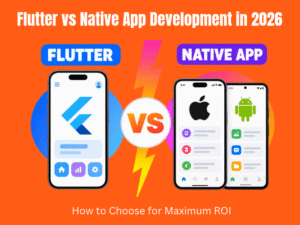
Cross platform development using frameworks such as Flutter or React Native offers a shared codebase, faster iterations, and significant maintenance savings. Cross-platform tools like Flutter allow single codebase development for both platforms. TVL IT Solutions has published a detailed Flutter vs React Native comparison to help teams decide.
5G networks enable faster app performance with lower latency, raising user expectations for responsiveness across all mobile platforms.
Typical stack combinations TVL IT Solutions uses:
| Project Type | Mobile | Backend | Database |
| Startup MVP | Flutter | Node.js | PostgreSQL |
| Regulated Enterprise | Kotlin / Swift | .NET | SQL Server |
| Data-heavy AI App | React Native | Python | PostgreSQL + Redis |
Complementary tools include CI/CD pipelines, code quality scanners, cloud services for push notifications, file storage, analytics, and software development kits for crash reporting.
Kick-off marks the transition from planning to execution. It is typically anchored around a 2–3 hour workshop with all key stakeholders, setting the rules for how the team will work together.
Roles in a typical TVL IT Solutions project:
Communication cadences are established: sprint length (often 2 weeks), demo schedule, channels (Slack, Teams, Jira), and decision-making rules.
Concrete kick-off outputs include:
TVL IT Solutions selects the engagement model – dedicated team, fixed-scope project, time & material, or hybrid – based on the clarity of requirements and the client’s internal capacity.
Agile methodologies – typically Scrum or Kanban – suit mobile app development projects because priorities often shift based on user feedback and market timing. Iterative development allows continuous improvement and adaptation based on user feedback, which is exactly what a fast-moving app project needs.
Refinement sessions clarify upcoming stories, size them, and check for dependencies so that sprint planning stays efficient. The development phase involves coding and integrating app features sprint by sprint, with each increment producing a testable build.
A concrete example: in a 2-week sprint for a retail app, the team might build a “saved items” feature. Sprint planning breaks it into backend API, frontend UI, analytics events, and QA stories. Daily stand-ups surface blockers. The sprint review demos the working feature to stakeholders. The retrospective identifies what to improve next sprint.
TVL IT Solutions ensures visibility for clients through:
Agile does not mean “no plan.” The roadmap from earlier phases stays in place but is refined as data and learnings accumulate. This balance between structure and flexibility is what separates successful app development from chaotic feature-chasing.
Frontend development builds screens and user interactions for mobile applications – it is what users see, touch, and judge within seconds.
Engineers translate design system components into native or cross-platform widgets, ensuring pixel-perfect layouts and accessible touch targets. The goal is to make the app’s interface feel responsive, polished, and consistent with the design specifications approved during the UX/UI phase.
Performance considerations include:
Handling error states and network changes is where most mobile apps either earn or lose user trust. This means friendly messages for timeouts, local caching for data storage, retry strategies, and clear user feedback when syncing data. The aim is to create apps that feel reliable even on unreliable networks.
TVL IT Solutions aligns frontend development code with analytics and A/B testing needs, tagging important events like onboarding completion, search usage, or in-app purchases. These tags feed into mobile analytics platforms that inform future roadmap decisions.
Backend development powers everything users do in the mobile app: authentication, data storage, workflows, notifications, and reporting. Implementing backend services is where business rules come to life.
API design for mobile clients requires clear versioning, pagination, and error structures so cross platform mobile apps and native clients remain stable across updates. Whether you choose RESTful or GraphQL depends on the complexity of data relationships and how frequently the mobile client’s data needs change.
Data modeling for typical domains – users, orders, tickets, documents – must plan for growth: indexes, sharding strategies, and archival policies. This is especially relevant for enterprise apps and complex apps handling large data volumes.
AI and ML enhance app functionality by learning user behavior, enabling personalized recommendations, smart search, and predictive workflows. TVL IT Solutions integrates AI and ML capabilities into backend services where the business case supports it.
Integration patterns with existing enterprise systems – Microsoft Dynamics, Salesforce, SAP, or custom ERPs – are a core TVL IT Solutions strength. These integrations often require careful handling of data mapping, error recovery, and rate limiting.
Security measures in backend development include token-based auth (JWT, OAuth2), role-based access control, rate limiting, input validation, comprehensive logging, and monitoring with tools like Application Insights or CloudWatch.
Quality assurance is not a phase – it is integrated throughout the development process. Testing ensures the app works as intended and is free of issues before it reaches app users.
Different layers of app testing include:
| Test Type | Purpose |
| Unit tests | Verify individual functions and methods |
| Integration tests | Confirm modules work together correctly |
| API tests | Validate backend endpoints and data contracts |
| UI automation | Simulate user journeys across screens |
| Manual exploratory | Discover edge cases automation misses |
| Device lab testing | Test on real hardware across OS versions |
| Beta testing | Gather feedback from real users via TestFlight or internal distribution |
Functional testing ensures all app features work correctly against acceptance criteria. Security testing prevents vulnerabilities that could lead to hacks – critical for fintech, healthcare, and enterprise apps. User experience testing confirms the app matches design guidelines and accessibility standards.
Mobile-specific challenges include device fragmentation on the android operating system (vastly differing screen sizes, OS versions, hardware capabilities), network variability, and battery consumption. Testing under simulated poor-network conditions – latency, packet loss, bandwidth limitations – and offline behavior is essential.
TVL IT Solutions follows test driven development practices where feasible, designs test cases based on user journeys, runs regression suites before each release, and monitors crash reports in staging builds. Non-functional testing for enterprise customers includes load and stress tests on backend APIs and accessibility checks using screen readers and color-contrast tools.
This phase bridges a working app and a successful release, requiring attention to legal, marketing, and technical details that many teams underestimate.
Compliance topics to address:
App store assets must be prepared separately for Google Play and the Apple App Store:
Deployment includes creating production builds and preparing app store listings – a step that requires coordination between engineering, design, and marketing.
Roll-out strategy options include:
TVL IT Solutions collaborates with marketing and product teams to schedule releases around campaigns, onboarding plans, and internal training so staff are ready to support users from day one. Deployment involves submitting the app to app stores for approval, and planning must account for review timelines.
Each store has its own technical steps and review expectations. Planning for both early in the development process avoids last-minute delays that can derail launch timelines.
Google Play Store:
Apple App Store:
Common reasons for rejection include insufficient privacy disclosure, crashes on older OS versions, unclear login flows, and incomplete demo accounts for reviewers. TVL IT Solutions anticipates these by including review preparation as a checklist item in sprint planning. Mobile app updates must go through the app store review process each time, so establishing a smooth submission workflow pays dividends over the app’s lifetime.
For enterprise-only apps, organizations may use Apple’s enterprise distribution and Android private channels or MDM tools instead of public listings on the app store. This approach follows app store guidelines while restricting access to authorized users.
The first 90 days after launch are critical. This is when you validate whether the app is delivering the business outcomes defined during strategy, and where you catch issues before they become entrenched.
Analytics instrumentation across the app tracks:
Monitoring app performance after launch is crucial for success. Set up crash reporting SDKs and backend error monitoring (Sentry, CloudWatch, Application Insights) with alerting when thresholds are breached. User feedback is essential for planning future app enhancements – monitor store reviews, in-app feedback forms, and support tickets.
Managing the release train means shipping small, frequent updates that blend bug fixes, UX refinements, and occasional new features. Regular maintenance keeps users happy and helps the app stay competitive. Each update maintains backward compatibility and protects store ratings.
Maintenance is necessary to keep the app updated and functional over time. Both iOS and Android release major OS versions yearly, and preparing for compatibility issues – UI changes, permission changes, deprecated APIs – is part of the long-term roadmap.
TVL IT Solutions proposes a long-term maintenance and evolution plan that includes OS upgrade readiness, security patch cycles, and a process for evaluating and prioritizing new features based on analytics and user feedback.
These anonymized case snippets illustrate how a disciplined mobile application development process plays out across industries.
Retail Loyalty App (Cross-Platform)
A mid-sized retailer launched a cross platform app for customer loyalty – points tracking, push notifications, personalized offers. During discovery, user interviews revealed that long onboarding forms caused significant drop-off. The team implemented progressive profiling, reducing onboarding abandonment from roughly 30% to around 12%. The app was built as a cross platform mobile app using Flutter, with a shared backend serving both the mobile and web apps. This high quality app drove measurable increases in repeat orders within six months.
Field Service Enterprise App
A services company needed an app for field agents conducting on-site visits. Discovery uncovered that offline mode and retry logic were far more critical than real-time dashboard visuals. The app integrated securely with Microsoft Dynamics for backend sync. TVL IT Solutions built offline-first architecture with local data storage and queue-based synchronization. This successful app reduced manual paperwork and improved visit completion rates.
B2B SaaS Companion App
A SaaS platform with an existing web dashboard needed a mobile companion for push notifications, basic dashboard views, search, and identity management. The mobile development process prioritized a shared backend and consistent design system across web apps and mobile. TVL IT Solutions handled architecture design, backend and frontend development, QA, and ongoing optimization. The app extended the product’s reach to users who needed on-the-go access without duplicating backend services.
Many companies in North America, Europe, and the Middle East choose offshore teams in India for mobile app development projects. The reasons are straightforward: access to deep technical talent, the ability to scale teams up or down, and extended time-zone coverage that can accelerate delivery.
TVL IT Solutions offers flexible engagement models:
Learn more about choosing the right development partner.
Governance practices include weekly or bi-weekly steering calls, shared KPIs, transparent reporting via dashboards, and clear ownership: code repositories and cloud accounts remain with the client. This eliminates vendor lock-in.
Practical advice for buyers:
If you are evaluating an app development company for your next mobile or custom software initiative, TVL IT Solutions welcomes a conversation focused on your specific goals – secure, scalable, and business-ready software development tailored to your growth objectives.
Following a structured app development lifecycle – from strategy and discovery through design, development, testing, deployment, and maintenance – reduces risk and accelerates time to value. The mobile app development stages outlined in this guide are not bureaucratic overhead. They are the difference between an app that drives business outcomes and one that drains resources.
Mobile apps are no longer standalone products. They are part of a wider digital ecosystem that includes web apps, backend services, analytics, progressive web apps, and sometimes AI/ML components. The technology stack, the development platform, the programming languages, the software development kits – all of these choices compound over time. Getting them right early, through disciplined discovery and architecture, pays dividends for years.
Treat your app development process as a repeatable capability, not a one-time project. Build in continuous learning. Measure what matters. Iterate based on real data from real app users. The companies that do this consistently are the ones that turn their mobile app into a genuine competitive advantage.
TVL IT Solutions is a long-term engineering partner for custom mobile app development, enterprise platforms, and digital transformation. If you are ready to build apps that are secure, scalable, and aligned with your business goals, we are ready to help you get there.
The main stages include strategy, product discovery, requirements planning, UX/UI design, technical architecture, development, testing, app store deployment, and post-launch maintenance.
A typical mobile app development project can take around 6 to 9 months from initial strategy and discovery through development, testing, and launch. The timeline depends on app complexity, features, integrations, and platform requirements.
Native development is ideal for apps requiring advanced device capabilities, high performance, or platform-specific experiences. Cross-platform development with technologies such as Flutter or React Native can reduce development time and maintenance costs.
Product discovery helps validate the target audience, business goals, user needs, features, and technical requirements before significant engineering begins. It reduces scope creep, costly rework, and the risk of building the wrong product.
Post-launch work includes monitoring crashes and performance, analyzing user behavior, collecting feedback, fixing bugs, improving UX, maintaining security, and updating the app for new iOS and Android versions.
At TVL IT Solutions, we specialize in delivering scalable, secure, and custom software development services tailored to your unique business needs. Whether you’re a startup or an enterprise, our team is ready to turn your vision into reality.
Get Started Now