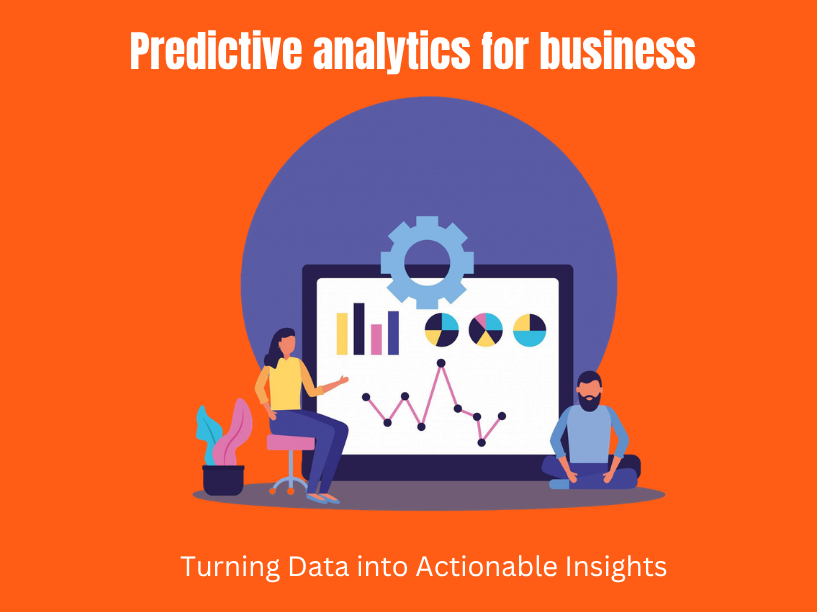

Predictive analytics uses historical data, statistical algorithms, and machine learning techniques to identify the likelihood of future outcomes. Instead of telling you what happened last quarter, it estimates what will happen next. The shift from hindsight to foresight is what separates reactive companies from proactive ones. Data analytics, machine learning, and artificial intelligence make this shift possible.
The post-2020 period made the case for predictive analytics sharper than any whitepaper could. Supply chain breakdowns, demand volatility, and inflationary swings exposed rule-based forecasting as inadequate. Business leaders, operations teams, product managers, finance, and marketing teams now need probability-based forecasts woven into their daily tools. Concrete applications are already widespread: demand forecasting for retail Q4 peaks, fraud detection in fintech transactions, classification models for churn prediction, and clustering models for customer segmentation.
TVL IT Solutions builds custom predictive analytics solutions into web apps, mobile apps, and B2B SaaS platforms for startups, SMEs, and enterprises. This article covers core concepts, the benefits of predictive analytics, main model types (decision trees, regression, time series), implementation steps, future trends, and real-world case studies. It transforms raw data into actionable insights for businesses; the question is how to do it well.
Predictive analytics is a branch of business analytics that uses historical and current data, statistical methods, and AI/ML to estimate the probability of future events. Key components of predictive analytics include data collection, data mining, statistical modeling, and machine learning. The goal is not a crystal ball; it is calibrated probability.
Three levels of data analytics clarify where predictive sits. Descriptive analytics tells you what happened: last month’s revenue, last quarter’s churn rate. Diagnostic analytics explains why it happened: which campaign underperformed, which region lagged. Predictive analytics estimates what is likely to happen next. Prescriptive analytics goes one step further and recommends what to do about it.
Between 2023 and 2025, retailers used ML models to predict Black Friday and Q4 demand. Subscription SaaS platforms built churn prediction models using engagement metrics. Manufacturers applied predictive maintenance on IoT sensor data to anticipate machine failures before downtime occurred. Predictive analytics enhances decision-making by moving from reactive to proactive strategies based on statistical probabilities.
Modern cloud platforms and data warehouses like Snowflake, BigQuery, and Redshift have lowered the barrier so mid-size companies can run predictive models without Fortune 500 infrastructure. The real goal is actionable insights: predictions embedded into workflows through dashboards, alerts, or in-app recommendations, not isolated reports. TVL IT Solutions designs and develops AI and ML solutions that embed these predictive capabilities directly into CRM, ERP, and custom SaaS platforms.
Selecting the right predictive analytics techniques depends on data type (numeric, categorical, time-based), problem type (regression, classification, clustering), and business context. The cost of errors and the need for interpretability also drive the choice. Machine learning enhances predictive analytics by identifying patterns in data that manual analysis would miss.
Regression analysis predicts numeric outcomes based on variable relationships. Linear regression models the relationship between independent variables and a dependent variable to forecast future sales, marketing ROI, or average order value. Logistic regression maps inputs to a probability for binary outcomes (e.g., will a customer convert or not). Regression is fast, interpretable, and often the right starting point for predictive data analysis; it underperforms when relationships are non-linear.
Classification models categorize data based on historical patterns. They predict categories for data points based on historical data, sorting items into discrete classes: “will churn” vs. “won’t churn,” “legitimate” vs. “fraudulent.” Common algorithms include logistic regression, decision trees, and gradient boosting machines like XGBoost. Common techniques in modern predictive analytics include regression analysis and classification models working together.
Clustering models group data points based on similarities without predefined labels. They are unsupervised, meaning they discover natural groupings rather than predicting a known outcome. Customer segmentation by behavior, product usage, or risk profile are typical applications.
Decision trees map decisions and their consequences in a tree structure, making them readable by executives who need clear reasoning. Random forests combine many trees for higher accuracy but sacrifice some interpretability. A 2026 comparative study of 16 interpretable models found that Explainable Boosting Machines and symbolic regression matched or exceeded black-box models on many tabular datasets, making interpretable approaches viable in regulated environments.
Time series models forecast future trends using sequential data points. ARIMA, exponential smoothing, and Prophet capture seasonality, trends, and cyclic effects. Time series forecasting is core to demand forecasting, staffing, and cash-flow prediction.
Neural networks analyze complex, non-linear relationships in data. They are effective for high-volume inputs like clickstream logs, image-based quality control, and text support tickets. Deep learning often improves accuracy when enough data exists but requires more compute and is harder to explain to stakeholders. Data scientists typically reserve neural networks for problems where simpler predictive analytics models fall short.
The global predictive analytics market was valued at USD 22.22 billion in 2025, projected to reach USD 116.65 billion by 2034 at a 19.8% CAGR. That growth reflects a clear pattern: predictive analytics helps organizations anticipate potential challenges and make informed decisions proactively rather than reactively.
Better decisions, faster. Predictive analytics enhances decision-making with real-time data insights. A CEO evaluating market expansion can use forecasted demand by region instead of relying on intuition. Predictive analytics important to note here: probability-based models replace gut feel with calibrated estimates.
Demand forecasting and inventory management. Predictive analytics can improve demand forecasting, leading to better inventory management and reducing stockouts. Retailers preparing for Diwali in India or Christmas in the US/EU can balance stock levels by factoring in promotions, weather, and macroeconomic signals. Predictive analytics improves forecasting accuracy by 85% compared to manual methods, according to industry benchmarks.
Customer behavior understanding. Predictive analytics helps identify customer behavior patterns effectively. Predictive analytics provides customer insights enabling personalization and anticipatory actions such as predicting customer churn. Marketing teams can then tailor marketing strategies through personalized offers in mobile apps and email campaigns. Customer segmentation through clustering improves targeted marketing strategies, and targeted marketing campaigns benefit from predictive analytics by predicting which customer segments respond best to offers and channels.
Operational efficiency. Operational efficiency can be improved by anticipating equipment maintenance needs and optimizing workforce allocation using predictive analytics. Predicting call center volumes or logistics delays allows managers to schedule staff before bottlenecks form. Companies using predictive analytics can reduce operational costs when forecasts translate into tighter resource allocation. Predictive analytics can optimize operations and reduce risks across business operations.
Risk reduction. Businesses can mitigate risks using predictive analytics techniques. A lending platform that scores borrowers with predictive models can assess credit risk before disbursing funds, reducing default rates. Scenario modeling helps CFOs test “what if” questions using predictive models: new pricing tiers, new regions, changed supply chains.
Successful applications of predictive analytics span industries including retail, healthcare, banking, manufacturing, and logistics. Here is a practical tour of use cases relevant to TVL IT Solutions’ clients.
Customer behavior and personalization. E-commerce platforms use classification models to recommend products and reduce churn. Streaming platforms like Netflix use predictive analytics for content recommendations, matching viewer history against millions of user profiles. Predictive analytics enhances customer experience by personalizing interactions, from push notifications to homepage layouts. Predictive analytics helps businesses anticipate customer preferences and needs before the customer articulates them.
Fraud detection and credit risk. Risk management and fraud detection utilize predictive analytics to identify suspicious transactions in real-time. Payment gateways and buy-now-pay-later platforms run decision trees, random forests, and neural networks against incoming transactions, flagging anomalies in milliseconds using patterns from historical fraud cases.
Demand forecasting and inventory. Time series models predict SKU-level demand by region, factoring in promotions, holidays, and macroeconomic indicators. One mid-market retailer reduced its demand forecast error from 35% MAPE to 15% MAPE, translating into more stable supply chain management.
Dynamic pricing and revenue. Airlines, ride-hailing apps, and hospitality businesses adjust prices based on predicted demand and capacity. A hotel chain might raise rates when a model flags a convention weekend three months out.
Predictive maintenance. Manufacturers and logistics fleets use IoT sensor data to predict failures before they halt production. This shifts maintenance from calendar-based to condition-based scheduling.
Sales and marketing prioritization. A B2B SaaS firm can score leads to focus sales reps on accounts most likely to convert, integrating predictions into their CRM. Businesses using predictive analytics can improve sales conversion ratios by directing effort where probability of close is highest.
Predictive analytics involves collecting data, cleaning and preparing data, building and testing predictive models, and using predictions to guide business decisions. Here is the end-to-end lifecycle.
Data collection. Collecting and processing relevant data is essential for predictive analytics. Sources include CRM records, ERP transactions, mobile app analytics, web logs, IoT sensors, and third-party feeds like market indices or weather data. Both historical and current data flow into data warehouses or lakes. Unstructured data (text, images) also feeds advanced analytics models when prepared data pipelines exist to process it.
Data preparation. Raw data contains missing values, duplicates, and outliers. Feature engineering turns data points into model-ready inputs. Data quality at this stage determines everything downstream; poor input data will ruin model performance regardless of algorithm sophistication.
Model building. Building and training predictive models is a key step in implementation. Data scientists select algorithms (regression, classification, clustering, decision trees, neural networks) based on the business question. Training and validation splits prevent overfitting. Statistical algorithms learn patterns from prepared data and new data refines them.
Evaluation. Metrics like precision, recall, ROC-AUC (for classification) and MAE/MAPE (for forecasting) measure performance. Every predictive model based on machine learning algorithms should be compared against simple baselines; if a naive average beats your model, complexity is not justified.
Deployment. Models embed into business systems: APIs inside custom SaaS platforms, workflows in Salesforce or Microsoft Dynamics, or scheduled jobs that refresh dashboards. Real time data processing enables predictions at the moment of interaction rather than in batch reports.
Monitoring. Streaming data platforms ensure continuous learning from incoming data. Models degrade as markets and customer behavior shift; tracking data drift and refreshing models is non-negotiable. TVL IT Solutions implements this lifecycle from backend engineering to cloud infrastructure, using security-first deployment practices.
Integrating predictive analytics involves identifying business objectives first. Vague goals like “use AI” fail. Concrete objectives work: “reduce churn by 10% within 12 months” or “improve forecast accuracy for top 50 SKUs.”
Assess data maturity. Audit existing data sources, data engineering capabilities, governance, and tools already in use. Many organizations collect data across CRM, ERP, and web analytics but lack the pipelines to unify it. Establishing data governance policies is crucial for predictive analytics; without governance, models train on inconsistent or stale inputs.
Follow a phased roadmap. Start with a pilot project on a low-risk, high-visibility use case like lead scoring or basic demand forecasting. Move to limited rollout. Then scale organization-wide. This approach builds stakeholder buy-in through early wins.
Build cross-functional teams. Data scientists, ML engineers, domain experts, and business owners collaborate. Siloed analytics teams produce models that never reach production. Data science outputs must connect to the business context where decisions happen.
Make build-vs-buy decisions. Off-the-shelf predictive analytics tools suffice for standard reporting. When the use case requires domain-specific customization, real time data integration, or embedding predictions into a mobile app or B2B SaaS product, custom development by a partner like TVL IT Solutions is the practical path.
Manage change. Train teams on interpreting predictions. Create interpretable dashboards. Document models so new team members can maintain them. Establish feedback loops from users back to the analytics team to refine models with new data.
Retail demand forecasting. A retail group with 175 physical stores and growing e-commerce deployed ML-based demand forecasting incorporating seasonality, promotions, and external variables. Forecast accuracy improved by 31%, reducing both overstock and stockouts across product lines. A separate case involved a retailer using ensemble gradient-boosted trees and LSTM per SKU and store; within six months, on-shelf availability for top SKUs rose by 25% and excess inventory dropped by 18%.
Fintech fraud detection and credit scoring. A payment platform implemented classification models and decision trees for fraud detection and credit risk scoring. The system analyzed transaction histories, device fingerprints, and customer behavior to flag suspicious activity. Result: faster decisioning, lower false positive rates, and reduced manual review queues. Compliance with regulations like GDPR required model explainability, which decision tree architectures supported.
SaaS churn prediction. A B2B SaaS company introduced churn prediction scores into its CRM using engagement data, usage logs, and support ticket histories. Customer success teams prioritized outreach to high-risk accounts and refined onboarding journeys. The outcome was more stable retention and higher customer lifetime value without increasing headcount on the success team.
TVL IT Solutions, as a custom software partner, handles the full stack for projects like these: data engineering, model integration, frontend development, and ongoing support.
Predictive analytics is evolving toward more automated, real-time, and AI-driven decision-making. Several trending technologies are reshaping what is possible.
Generative AI convergence. Generative AI enhances predictive models by simulating future scenarios. Synthetic datasets built via LLMs, GANs, and diffusion models can reach 90-95% of real-data model performance while reducing data acquisition effort. Natural-language interfaces let managers ask “what if?” questions conversationally. Statistical methods combine with generative approaches to predict future outcomes under multiple scenarios simultaneously.
Real-time streaming. Event-driven architectures and streaming platforms enable models that update predictions continuously. Use cases include real-time fraud detection, surge pricing, and dynamic inventory rebalancing. Gartner’s 2026 trend research names “agentic data streaming” as a top priority.
Democratization of advanced analytics. Low-code and no-code ML platforms, plus embedded analytics in business apps, put predictive capabilities into the hands of marketing teams and operations managers. This changes expectations for internal software and B2B SaaS products; users now expect predictions built in.
Regulatory and ethical pressures. As models influence lending decisions, hiring, and medical triage, explainability, bias testing, and governance become mandatory. Decision governance is now a board-level concern. Strategic insights from predictive models must come with auditable reasoning.
Companies that invest now in clean data pipelines, cloud-native architectures, and embedded predictive workflows will hold a competitive advantage as AI-native business operations become standard by 2027. The competitive edge belongs to organizations that treat predictions as operational infrastructure, not one-off experiments. Use predictive analytics to predict future trends, predict future events, and forecast future outcomes; the organizations that do this well will set the pace.
TVL IT Solutions is a custom software and AI/ML development partner that turns predictive analytics ideas into production-grade systems. Capabilities span backend and frontend web development, mobile app development, integration with Microsoft Dynamics and Salesforce, AI and ML solutions, and building custom SaaS products that embed predictive models directly into business workflows.
Engagement models include dedicated teams, fixed price, time and material, and hybrid, chosen based on project scope and client preference. The typical project flow starts with discovery workshops to clarify business goals, moves through data assessment and model design, then into scalable architecture planning, implementation, testing, and long-term support. Implementing predictive analytics through this structured approach ensures building predictive analytics frameworks that last.
Consider a concrete scenario: a startup wants to build an AI-powered B2B SaaS platform offering demand forecasting and customer analytics to its own clients. TVL IT Solutions handles the data pipeline, machine learning models, API layer, and user-facing dashboards as one integrated build. The platform uses artificial intelligence to identify patterns, predict future events, and deliver strategic insights to end users.
Start by identifying one or two high-impact predictive analytics use cases in your organization. Whether it is managing risk through fraud detection, improving marketing campaigns with predictive analysis, or sharpening demand forecasting accuracy, TVL IT Solutions can help you build, deploy, and maintain the systems that make those predictions operational. The human brain generates the business questions; the right predictive model, built on clean data and sound statistical modeling, generates the answers.
Predictive analytics uses historical data, statistical methods, and machine learning to forecast future outcomes and support better business decisions.
Common models include regression, classification, clustering, decision trees, random forests, time series models, and neural networks.
It can improve demand forecasting, customer retention, fraud detection, risk management, inventory planning, operational efficiency, and marketing decisions.
The process typically involves collecting data, preparing and cleaning it, building and evaluating models, deploying predictions into business systems, and continuously monitoring performance.
Common use cases include customer churn prediction, fraud detection, demand forecasting, predictive maintenance, dynamic pricing, customer segmentation, and sales lead scoring.
At TVL IT Solutions, we specialize in delivering scalable, secure, and custom software development services tailored to your unique business needs. Whether you’re a startup or an enterprise, our team is ready to turn your vision into reality.
Get Started Now