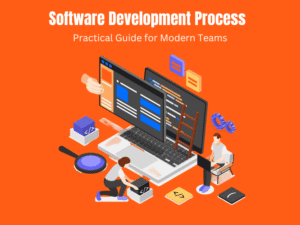
Learn how the software development life cycle drives high quality software delivery. TVL IT Solutions shares phases, models, security practices, and real-world case examples for startups, SMEs, and enterprises building scalable custom products.
The software development life cycle is a structured process that takes a product from initial idea through planning, design, coding, testing, deployment, and long-term maintenance. This guide breaks down every stage for development teams working on web, mobile, SaaS, and enterprise solutions. TVL IT Solutions uses SDLC daily to ship secure, scalable software for clients across industries and geographies.
Consider a 2026 fintech startup that skipped formal planning and jumped straight into coding. Within three months, the team faced conflicting software specifications, security flaws in its payment module, and a codebase no one could maintain software around. Contrast that with a competitor that followed a structured development life cycle: they launched on schedule, passed compliance audits, and onboarded users without critical bugs. The difference is process, not talent.
In this guide you will learn:
The Software Development Life Cycle (SDLC) is a structured framework for developing software. It provides a repeatable, formal process for planning, designing, building, testing, deploying, and maintaining information systems or software products. Whether you call it the development life cycle sdlc, the software development lifecycle, or simply the life cycle of a software project, the concept stays the same: a defined sequence of development stages that guide how software creation happens from start to finish.
SDLC applies across virtually every domain. B2B SaaS platforms rely on it for modular backend design and frequent releases. Internal enterprise tools use it for compliance-heavy integrations with systems like Microsoft Dynamics 365 or Salesforce. Game development teams follow it for iterative prototyping and cross-platform builds. AI and ML solutions layer additional phases for data pipelines, model training, and production monitoring on top of the same core structure.
A quick example: building a logistics tracking app in 2026 means running through planning (defining KPIs like delivery-time reduction), analysis (mapping driver and dispatcher personas), design (database schema and mobile UX), development (API and mobile coding), testing (GPS integration, load simulation), deployment (cloud rollout by region), and maintenance (bug fixes, predictive ETA features).
SDLC is methodology-agnostic. It can be implemented using Agile, Waterfall, DevOps, or any hybrid blend. The phases remain; the sequencing and feedback loops change.
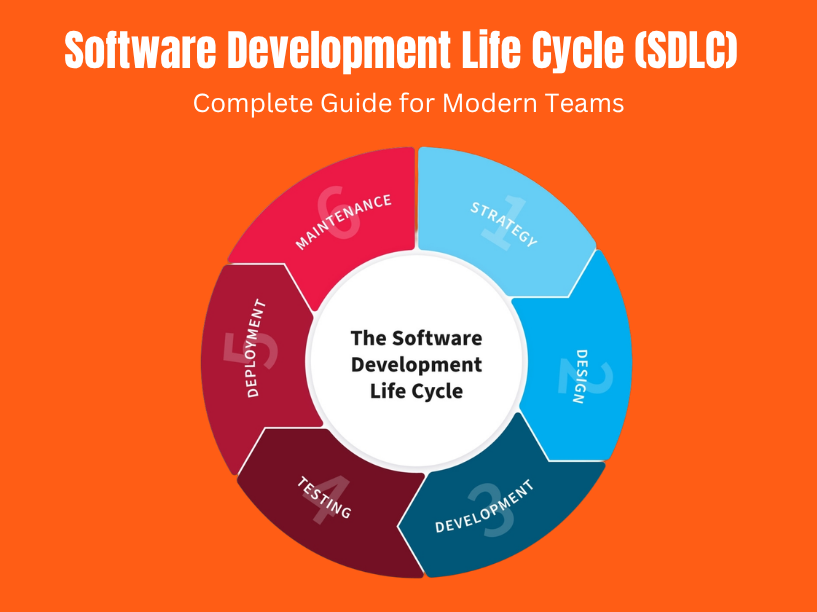
The SDLC typically consists of seven phases. While exact labels shift between frameworks, the underlying activities stay consistent. The SDLC consists of seven key phases that move a product from concept to live system and beyond.
Here are the key phases in order:
In modern practice, especially under the agile model and DevOps workflows, these phases often overlap and run iteratively rather than following a strict linear and sequential approach. TVL IT Solutions standardizes these development stages across offshore, dedicated-team, and hybrid engagement models so multi-timezone development teams stay aligned with shared artifacts like the software requirement specification, design documents, test plans, and deployment runbooks.
The planning phase establishes project goals and scope. It answers the fundamental questions: what are we building, why, for whom, and within what constraints? Planning helps prevent technical issues and unexpected costs by forcing clarity before a single line of code exists.
TVL IT Solutions runs planning through structured activities:
The analysis phase sits alongside planning as a distinct but closely related step. Here, project managers and business analysts translate business goals into a detailed software requirement specification (SRS) document. This SRS captures functional requirements, non-functional performance targets, compliance constraints (GDPR, HIPAA where applicable), and user personas.
Mini-example: For a retail mobile app launched in 2024, planning defined objectives like “increase repeat purchases by 15% through a loyalty program.” The analysis phase documented integration requirements with the client’s existing POS system, AI-based product recommendations, and data privacy rules for customers in the EU.
Key outputs from this stage include:
The design phase creates the blueprint for the architecture and user interface of the software. It translates the SRS into a technical and UX plan that developers, QA engineers, and stakeholders can all reference. The design phase creates a detailed prototype of how the system will look, behave, and scale.
Key design artifacts include:
TVL IT Solutions selects technology stacks based on project needs. Backend choices like Node.js, .NET, or Java depend on performance requirements and team expertise. Frontend frameworks like React or Angular are matched to UX complexity and maintainability. For cross-platform mobile, Flutter or React Native reduce rapid development cycles without sacrificing native feel.
Design also accounts for integration with third-party systems: payment gateways, identity providers, Salesforce CRM, or Microsoft Dynamics 365 ERP.
Non-functional requirements like performance under peak load, high availability, observability, and security first development practices are addressed here rather than bolted on later. Security measures should be embedded from the design phase to avoid costly rework downstream.
The development phase translates design specifications into code. This is the stage where coding happens: software developers write the actual software based on design specifications, using coding standards, development tools, and version control systems like Git (trunk-based or GitFlow branching strategies).
How work gets organized depends on the chosen software development methodology:
TVL IT Solutions follows practices that protect code quality across all engagement models:
Example scenario: Building the MVP of a healthcare appointment app, the team ran four two-week sprints. Sprint 1 delivered patient registration and provider search. Sprint 2 added appointment booking with calendar sync. Sprint 3 introduced notification workflows. Sprint 4 focused on accessibility compliance and polish. Each sprint closed with a demo, user feedback session, and backlog refinement, keeping customer expectations aligned with delivery reality.
Testing is not a single gate at the end of coding. In modern software development projects, it runs continuously from the development phase onward. The testing phase ensures software meets requirements and is defect-free before any release reaches users. Continuous testing is used in many SDLC models, and software testing can account for almost 33% of development costs, making the testing process a significant investment that pays back through lower post-release defect rates.
Key testing types relevant to modern systems:
TVL IT Solutions sets up automated test suites inside CI pipelines and layers manual exploratory testing for edge cases and UX validation. Automated testing tools streamline the testing process, especially for regression and performance scenarios that would take days to run manually. Common testing types include unit, integration, and acceptance testing, and all three are standard in every project pipeline at TVL.
Example: Before a major 2026 marketing campaign for an AI-powered recommendation engine, the team load-tested the API at 5× expected peak traffic. The test revealed a database connection pool bottleneck, which was fixed two weeks before launch, avoiding downtime that would have affected thousands of users.
The deployment phase releases software to users after testing confirms readiness. It covers the transition from staging or test environments to the production environment, including release planning, environment configuration, and go-live communication with stakeholders.
Common deployment strategies include:
TVL IT Solutions uses DevOps and CI/CD practices to automate build, test, and software delivery pipelines for web, mobile, and SaaS products. Operational readiness checks include infrastructure-as-code templates, backup and rollback plans, monitoring dashboards, and structured logging frameworks.
Example: Launching the first public version of a subscription-based EdTech platform at the start of an academic year required coordinating deployment across three AWS regions. The team used canary releases to validate performance in one region before rolling out globally. Runbooks documented every step, and automated alerts ensured the on-call team could track progress and respond within minutes if metrics deviated.
The maintenance phase is typically the longest part of the software development life cycle. It covers everything that happens after deployment: fixing bugs, applying security patches, performance tuning, and building new features. Maintenance ensures software remains functional and secure over time. Software maintenance includes updates, patches, and optimizations that keep the product aligned with evolving business processes.
Ongoing maintenance is necessary for software longevity and user satisfaction. Typical support workflows include:
TVL IT Solutions runs long-term partnerships where a dedicated team evolves a product continuously. For example, a logistics SaaS platform originally built in 2022 has gone through three major architecture revisions, shifting from a monolithic backend to microservices and adding real-time tracking powered by WebSocket connections. Each iteration was guided by production analytics and A/B experiments that revealed which features to refine, scale, or deprecate.
Keeping libraries, frameworks, and container images updated is critical to mitigate vulnerabilities in cloud-native and API-first architectures. This ongoing work ties directly back to the business goals defined during the planning phase, closing the loop on the entire development lifecycle.
There is no single “correct” sdlc model. The right sdlc model depends on risk profile, regulatory context, team maturity, and how fast requirements change. Different SDLC models include Waterfall, Agile, Spiral, V-Model, and Iterative approaches. Here is how each one works and when to use it:
Empirical research comparing these models found that lightweight methodologies (like Agile) score higher for small-scale software projects in agility and software quality, while heavyweight models deliver better cost and resource predictability for large and complex projects.
The big bang model is an SDLC approach with minimal upfront planning. Development starts immediately, and design and requirements emerge along the way. There is no formal project planning, no phased structure, and no documented software specifications before coding begins.
Typical use cases include:
The limitations for serious business systems are significant:
TVL IT Solutions might use a big bang style for a two-day internal prototype, such as testing a new game mechanic or validating an AI feature concept. But the prototype gets rebuilt under a full structured process before it ever reaches a production environment. For any software project with real users and business stakes, the big bang model introduces unacceptable risk.
Selecting the right sdlc process starts with honest assessment of your project context. Here are the factors that matter most:
Here are concrete combinations that TVL IT Solutions commonly recommends:
Offshore or dedicated team setups can fully support Agile and DevOps when communication and tooling are configured properly. Tools like Jira, Azure DevOps, GitHub, and Slack bridge time zones and keep project managers, software engineers, and stakeholders aligned. The key is matching model to context rather than following trends blindly. TVL IT Solutions walks clients through this evaluation during early engagement, often comparing effort estimates across multiple engagement models before committing.
Modern software development must integrate security from the earliest stages. Treating security as an afterthought in the testing or deployment phase leads to expensive rework and exposed systems. DevSecOps integrates security into every SDLC phase, embedding checks and controls throughout the sdlc process rather than bolting them on at the end.
Here is how security maps to each phase:
A 2026 study of 405 SME professionals found that 68% had implemented DevSecOps in some form, but only 12% ran security scans with every code commit. Additionally, 35% of organizations use AI to enhance software development security, applying machine learning to vulnerability detection and anomaly monitoring.
Example: When building a Salesforce-integrated claims application for a US-based insurer, TVL IT Solutions implemented automated SAST scans on every pull request, encrypted all data at rest and in transit, and enforced data residency rules requiring that customer records stay within US-based cloud regions. The result: successful software development that cleared the insurer’s internal audit on the first pass.
TVL IT Solutions is a custom software development and offshore services partner that applies SDLC rigor across web, mobile, game, and AI/ML solutions. Here is how that looks in practice.
Case 1 – European SME builds a B2B SaaS platform (2023–2024): A mid-sized European company engaged a dedicated team from TVL IT Solutions to build a scalable subscription management platform. The team followed the agile model with two-week sprints. Planning workshops defined the product vision and compliance requirements (GDPR). Design produced a microservices architecture with API-first backend. Over eight months, the team shipped iteratively, running security audits before every major release. The platform launched across three EU markets, handling multi-currency billing and real-time analytics.
Case 2 – Legacy ERP modernization via iterative model: A manufacturing firm needed to migrate an on-premise ERP to a cloud-native architecture without disrupting daily operations. TVL IT Solutions used an iterative model: the first cycle migrated reporting and dashboards, the second moved inventory management, and the third tackled order processing. Each cycle maintained backward compatibility with the legacy system until the final cutover. Rigorous design ensured data migration accuracy, and the development life cycle included rollback plans at every stage.
Engagement models and SDLC governance:
Whether you are at the idea stage, building an MVP, scaling a live product, or replatforming a legacy system, a structured development lifecycle reduces risk and accelerates delivery. If you want to explore how TVL IT Solutions can apply these practices to your next software project, start a conversation about your current phase and goals. The right process, matched to your context, makes all the difference.
The Software Development Life Cycle (SDLC) is a structured framework for planning, designing, developing, testing, deploying, and maintaining software.
The seven phases are planning, analysis, design, development, testing, deployment, and maintenance.
Common SDLC models include Waterfall, Agile, Iterative, Spiral, V-Model, Rapid Application Development (RAD), and Lean.
Security should be integrated throughout the SDLC. DevSecOps embeds security practices into planning, design, development, testing, deployment, and maintenance.
The right SDLC model depends on regulatory requirements, budget flexibility, time-to-market pressure, team maturity, and how frequently project requirements change.
At TVL IT Solutions, we specialize in delivering scalable, secure, and custom software development services tailored to your unique business needs. Whether you’re a startup or an enterprise, our team is ready to turn your vision into reality.
Get Started Now